
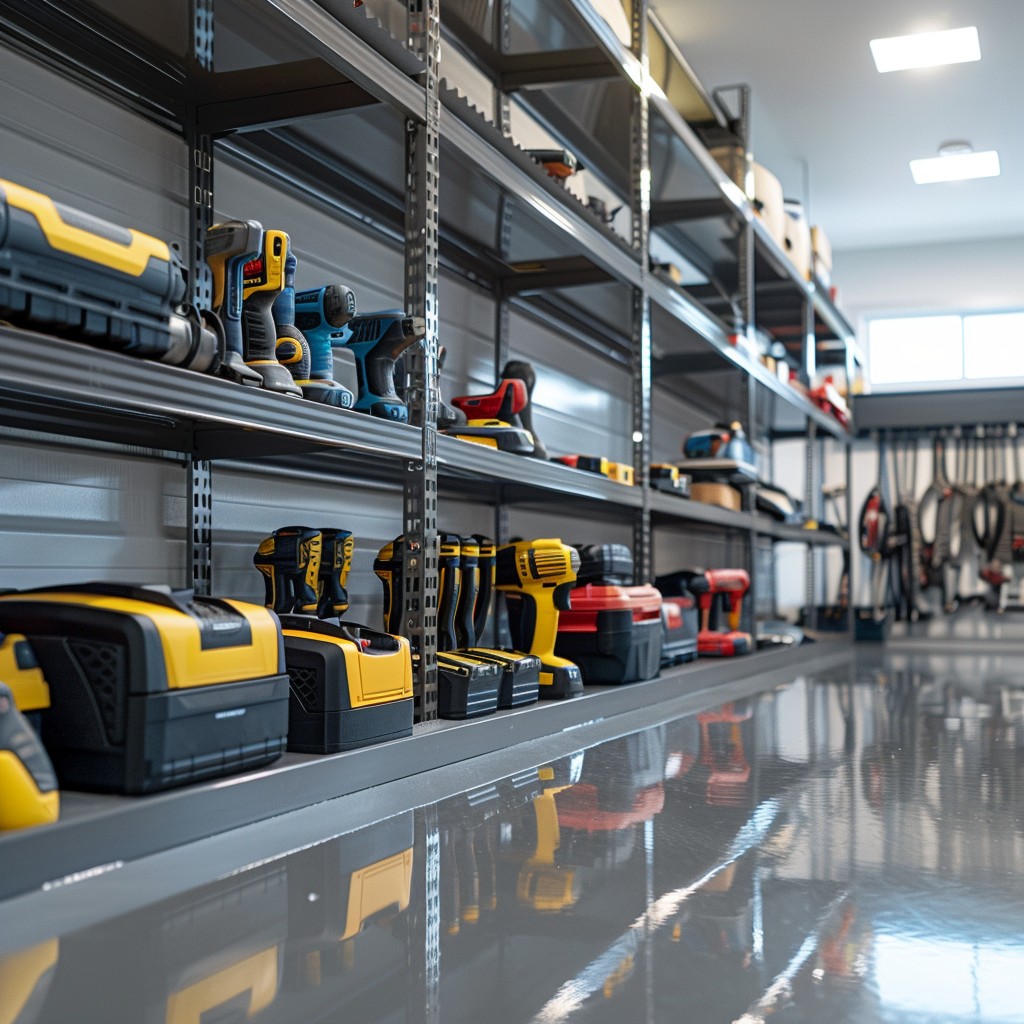
Flake epoxy and metallic epoxy can both transform a garage floor, but they are not the same product with different colors. They solve different problems, fit different spaces, and create very different day-to-day experiences.
For homeowners searching for garage floor epoxy in Boone, NC, the choice usually comes down to one question: is this garage mainly a working space or a showpiece space?
If the garage sees wet tires, tools, storage bins, bikes, boots, and winter grit, flake epoxy is usually the best fit. If the garage is more of a showroom, studio, display area, or finished extension of the home, metallic epoxy may be worth considering.
What is flake epoxy?
Flake epoxy, sometimes called a chip or broadcast floor, uses colored vinyl flakes broadcast into the coating. After the broadcast, the floor is scraped and sealed with a topcoat. The result is a textured, multi-color surface that looks clean while still being practical.
The flake layer does three important things:
- It adds visual texture.
- It helps hide dust, tire marks, and small debris.
- It gives the topcoat a more practical surface for a working garage.
That is why flake systems are so common in residential garages, workshops, mudrooms, utility spaces, and commercial areas that need durability without looking plain.
What is metallic epoxy?
Metallic epoxy uses metallic pigments blended into the coating to create movement, depth, and a one-of-a-kind visual effect. The finished floor can look like marble, smoke, flowing water, or polished stone depending on the colors and installation technique.
Metallic epoxy is more decorative than flake. It is often chosen for showrooms, offices, basements, studios, salons, retail spaces, and high-end garages where appearance is the priority.
The tradeoff is that a smooth glossy metallic finish can show dust, footprints, and smudges more easily. It can also feel slicker when wet unless traction additives or the right topcoat are used.
Flake vs. metallic epoxy at a glance
| Category | Flake Epoxy | Metallic Epoxy |
|---|---|---|
| Best use | Daily-use garages, workshops, utility spaces | Showrooms, studios, offices, display garages |
| Look | Speckled, clean, practical | Custom, glossy, high-end |
| Traction | Better natural texture for wet garage use | Smoother unless traction is added |
| Maintenance | Hides dust and debris well | Easy to clean but shows marks more readily |
| Customization | Many flake blends and broadcast densities | Highly custom color movement and depth |
| Typical priority | Function and durability | Visual impact |
Which is better for Boone garages?
For most Boone and Watauga County garages, flake epoxy is the better everyday choice. Local garages see snowmelt, road salt, gravel, rain, and mud. A flake system is built for that kind of traffic because it gives the floor texture and helps disguise the mess between cleanings.
That does not mean metallic epoxy is wrong. It means metallic should be chosen intentionally. If the garage is used for a collector vehicle, a home gym, a creative studio, or a clean display space, metallic epoxy can be a strong choice. It turns the floor into a design feature.
If the garage is used like a normal High Country garage, flake usually wins.
Durability depends more on prep than style
One common misconception is that the style determines durability. In reality, the preparation and coating system matter more.
Both flake and metallic floors need proper slab evaluation and mechanical surface preparation. Industry guidance for resin flooring focuses on removing contaminants, creating the right concrete surface profile, and addressing issues like moisture, laitance, old coatings, and weak concrete before installation.
If a floor is installed over poorly prepared concrete, either style can fail. If the slab is prepared correctly and the system is matched to the space, both can perform well.
Traction and winter use
Traction is one of the biggest reasons we recommend flake epoxy for daily-use garages. Boone-area garages often get wet. Tires bring in water, and winter slush can sit on the floor until it is swept or squeegeed away.
A full-broadcast flake floor with the right topcoat gives you a more practical texture than a smooth decorative floor. It is still important to clean up standing water, but the surface is better suited to the way most garages are used.
Metallic epoxy can be made more slip resistant, but doing so can change the look. That is part of the design conversation. The more traction you add, the less perfectly glassy the surface may appear.
Maintenance differences
Flake epoxy is forgiving. The pattern hides dust, small leaves, road grit, and minor tire marks. Most routine cleaning can be handled with sweeping and occasional mopping.
Metallic epoxy is also cleanable, but because it is usually smoother and glossier, it tends to show dust and footprints sooner. That may be fine in a showroom or finished interior. In a working garage, it can become frustrating if you want the floor to look perfect every day.
How to choose
Choose flake epoxy if:
- You park daily drivers in the garage.
- Wet tires and winter grit are normal.
- You want texture and easy maintenance.
- You use the garage for tools, storage, bikes, or hobbies.
- You want the best practical garage floor coating for Boone conditions.
Choose metallic epoxy if:
- The floor is part of the room design.
- You want a dramatic custom finish.
- The space stays cleaner and drier.
- You are comfortable balancing gloss, traction, and maintenance.
- The garage is more of a showroom than a utility space.
The recommendation
For most homeowners looking for epoxy flooring in Boone, NC, we recommend starting with flake. It gives you the strongest mix of durability, traction, low maintenance, and good looks for a real garage.
For homeowners who want the floor to be the centerpiece, metallic epoxy is worth a closer look. The right answer depends on the slab, the space, and how you use it.
Blue Ridge Epoxy does not recommend a system until we understand those details. A garage floor should look good, but it also needs to fit your life.
Sources and industry context
- Sherwin-Williams, Concrete Surface Preparation Guide for resin flooring systems: https://industrial.sherwin-williams.com/content/dam/pcg/sherwin-williams/resin-flooring/na/us/en-us/pdfs/project-prep-docs/Flooring-Concrete-Surface-Prep-Guide-G-1-SW-na-en.pdf
- Sika, Sikafloor application guidance and concrete preparation context: https://can.sika.com/dms/getdocument.get/60089573-3c89-4499-9d57-de10f1530913/sikafloor_application_guide_en.pdf
- Industry comparison context from epoxy flooring contractors and coating manufacturers was used to validate common use-case differences: flake floors are generally more practical for working garages, while metallic systems are typically chosen for decorative/showroom impact.